
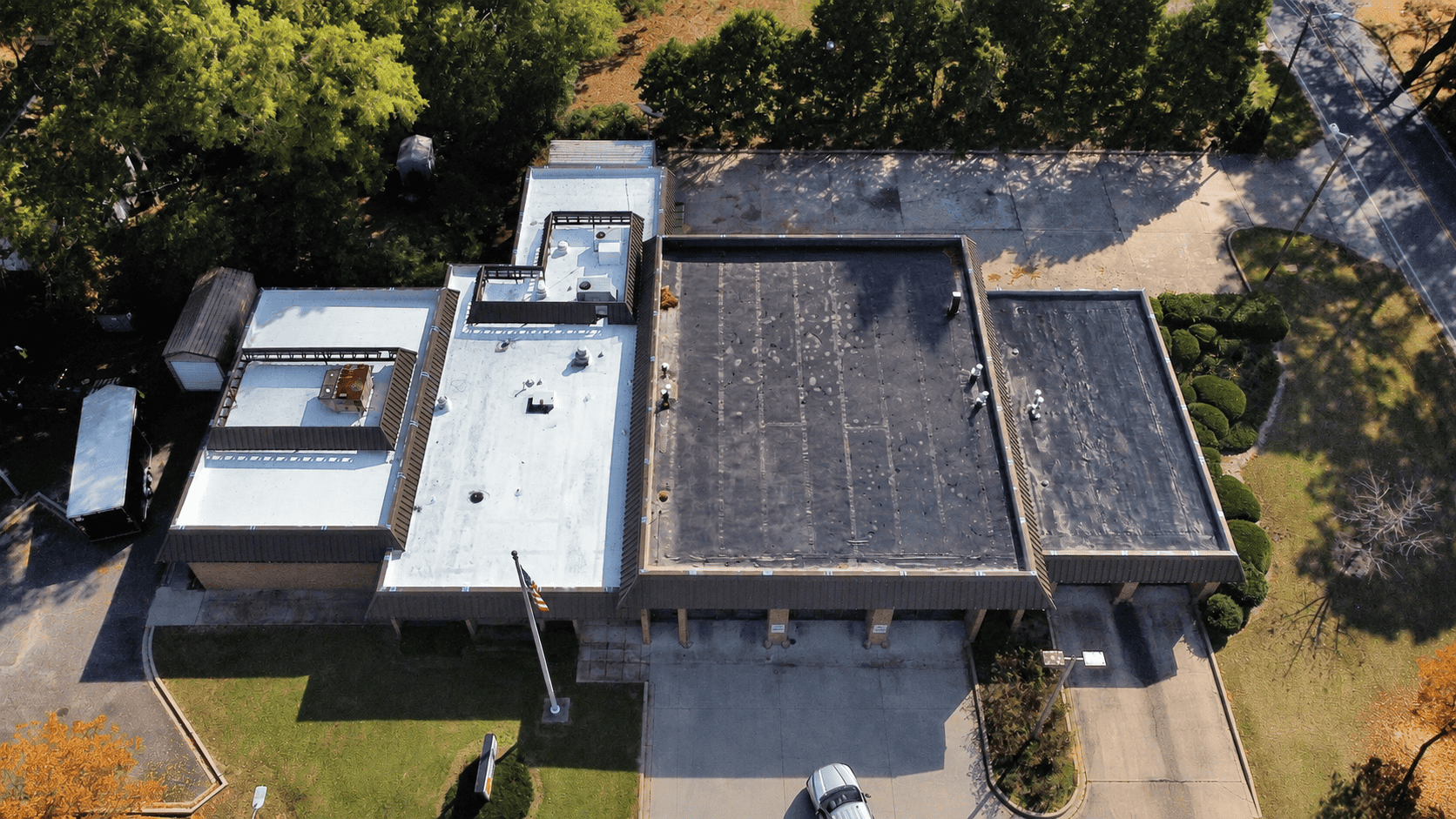
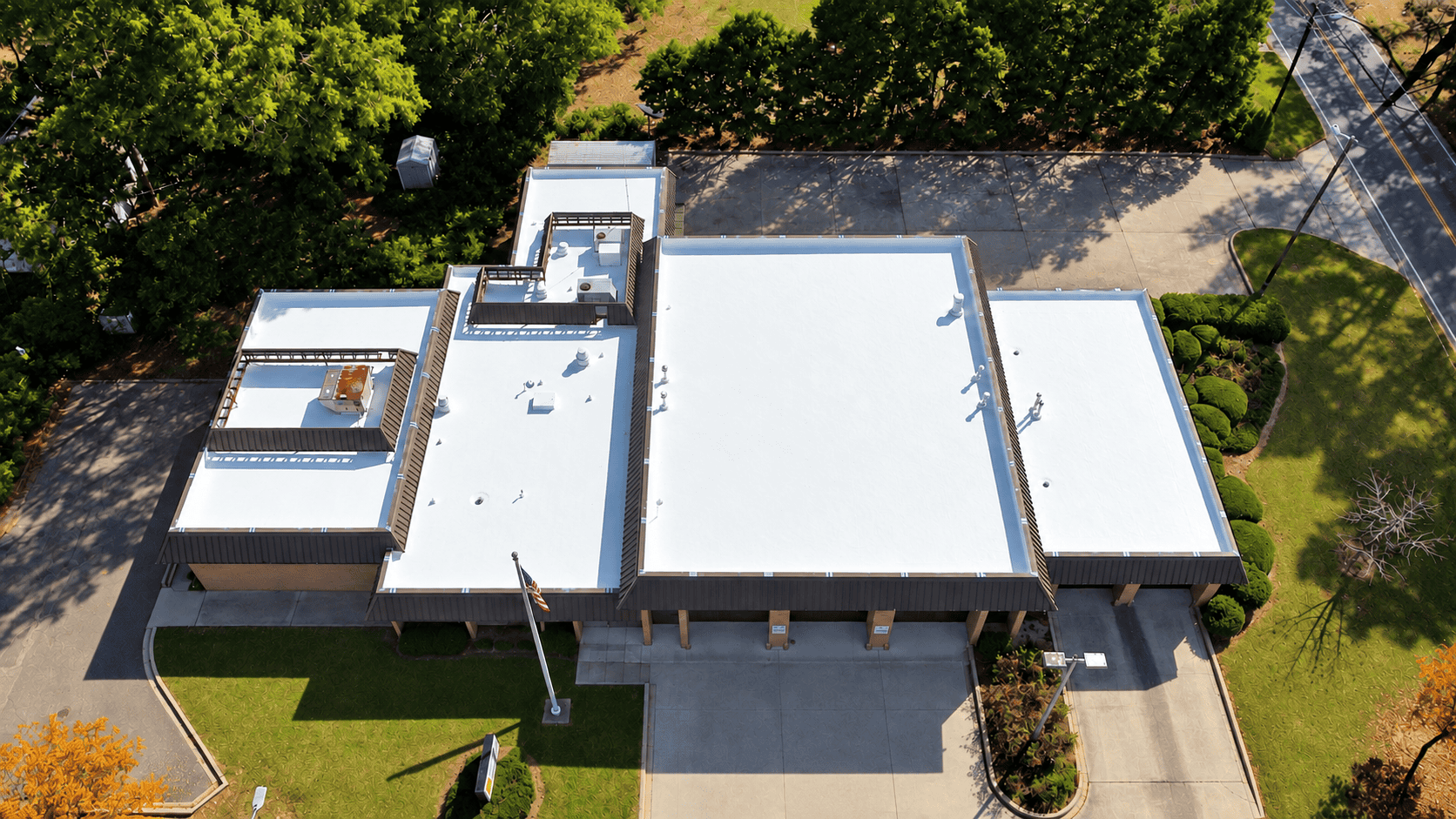
 BeforeAfter
↔
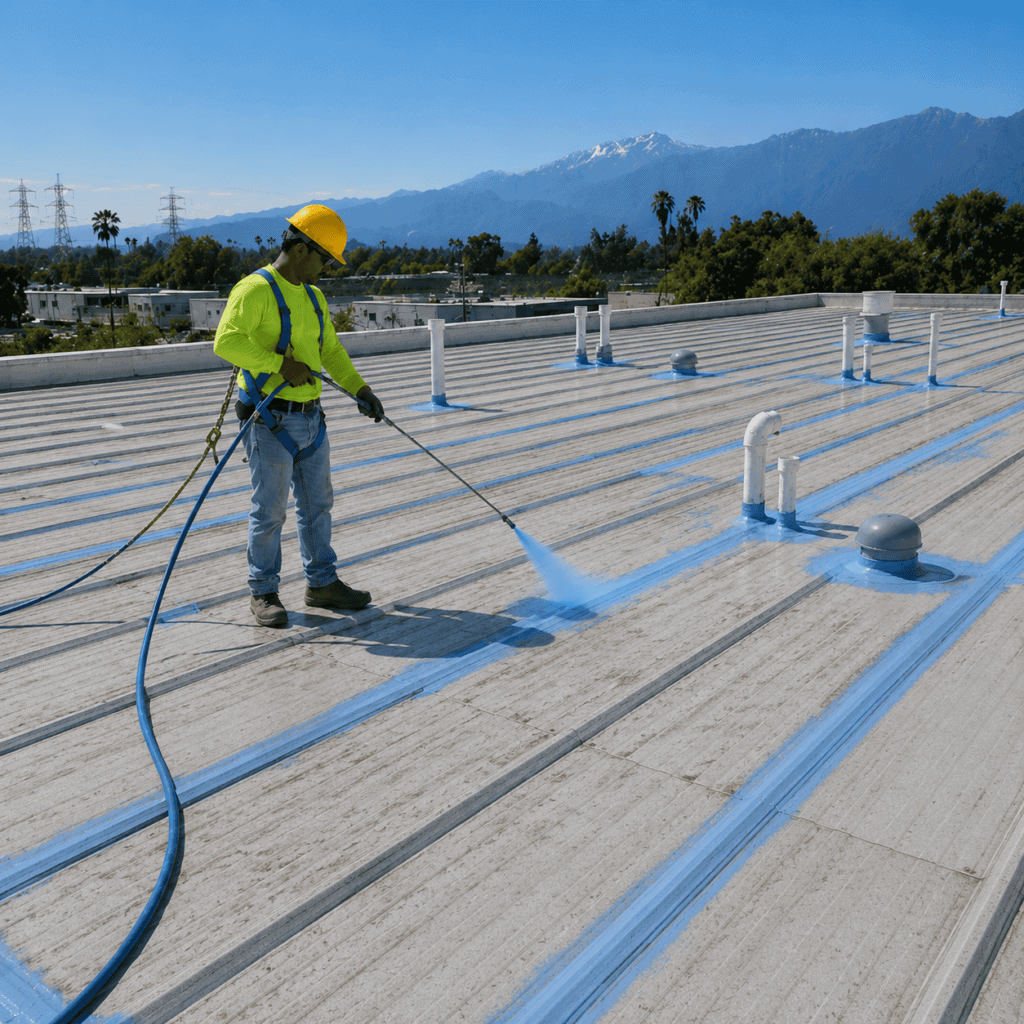
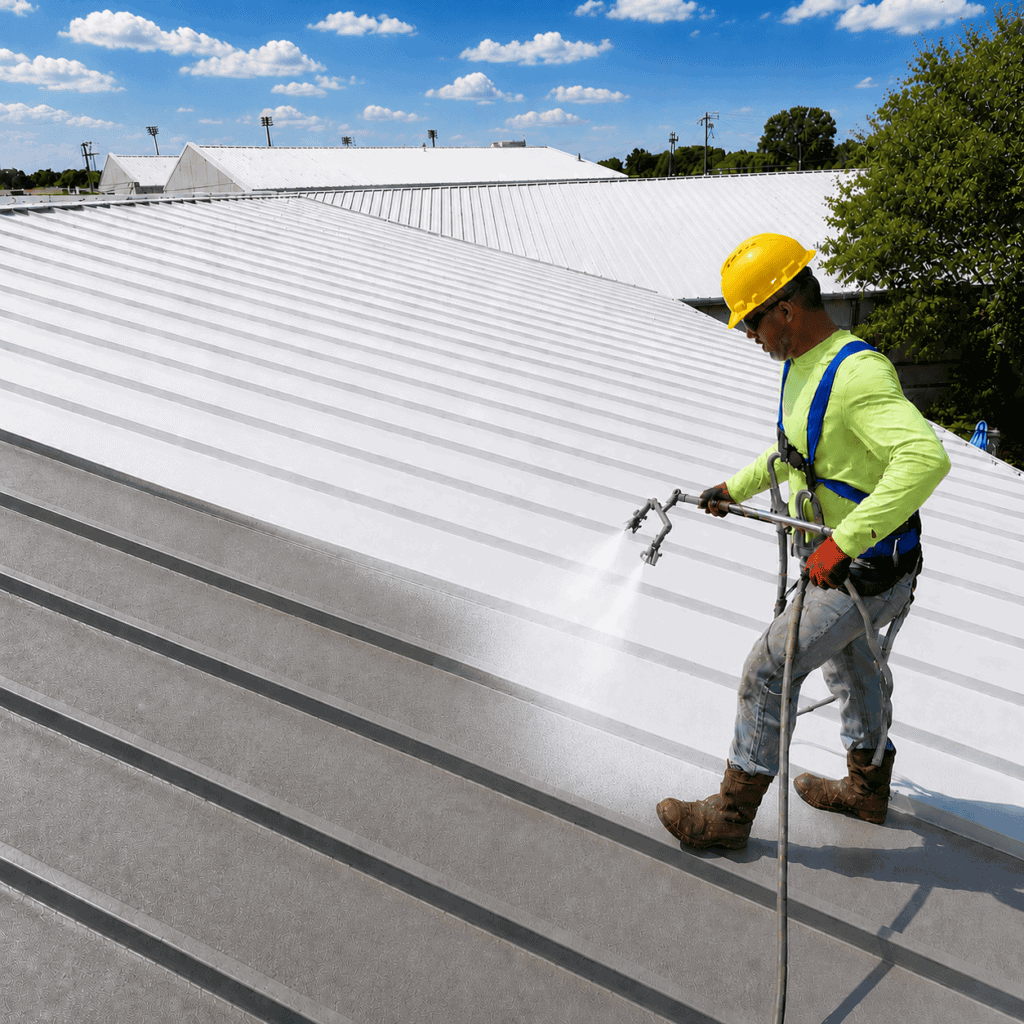
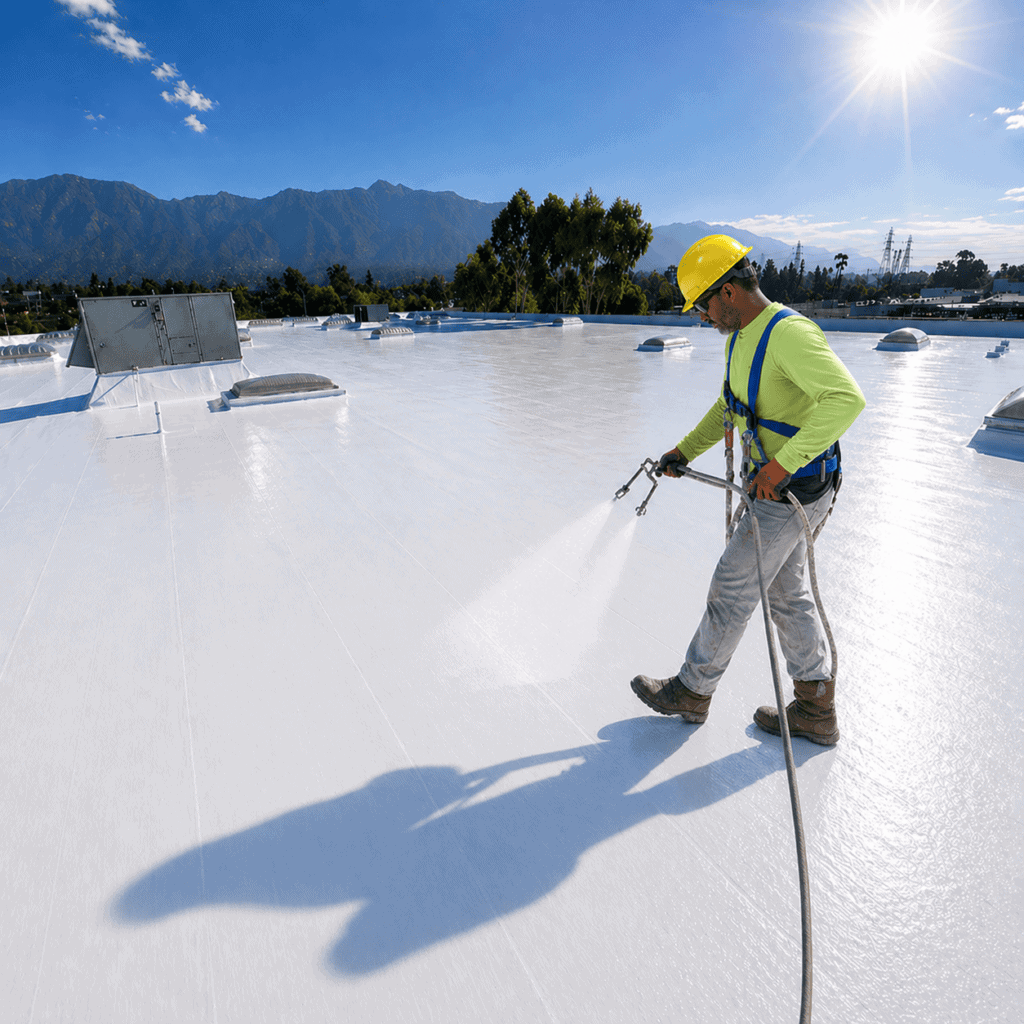
Flat roof restoration — seams and flashings sealed, ponding areas handled, and a seamless reflective membrane over the whole roof.
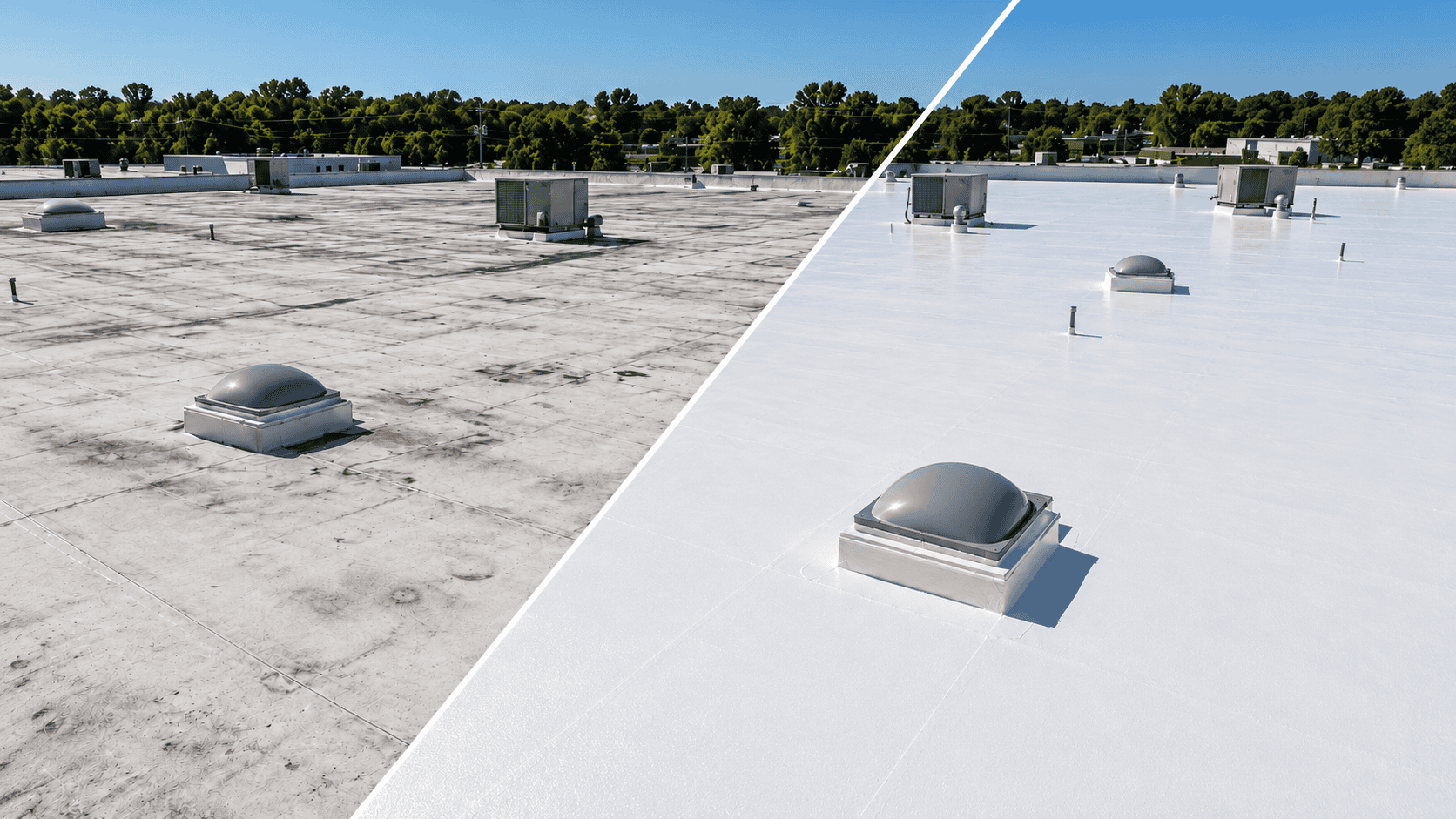 TPO/PVC Roofs Coming soonThe most common new commercial roof — and the slickest to coat. Aged TPO restores well with the right cleaner, adhesion test and primer.
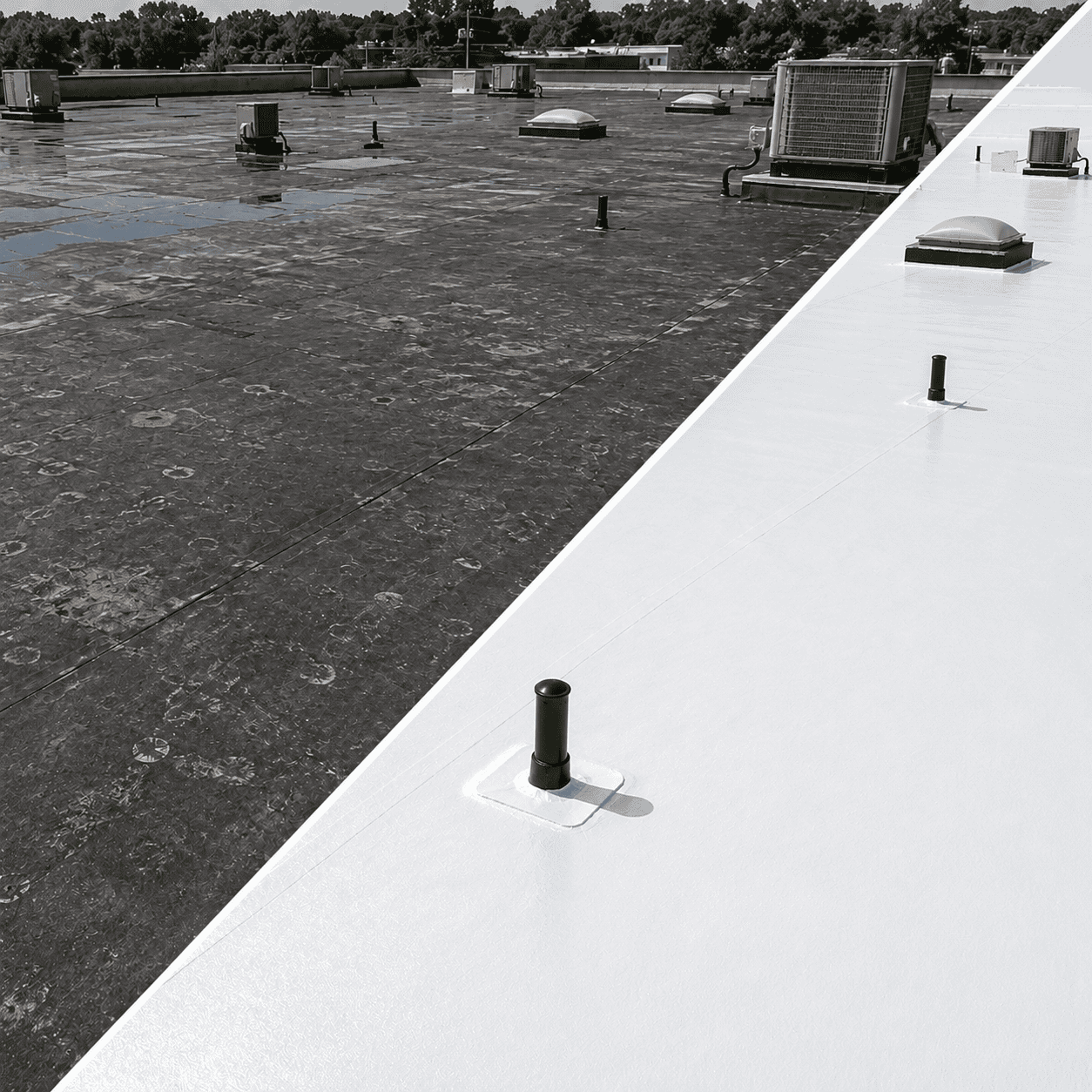 EPDM Roofs Coming soonBlack rubber that shrinks and pulls at seams and corners; a reflective coating cools it and seals the laps.
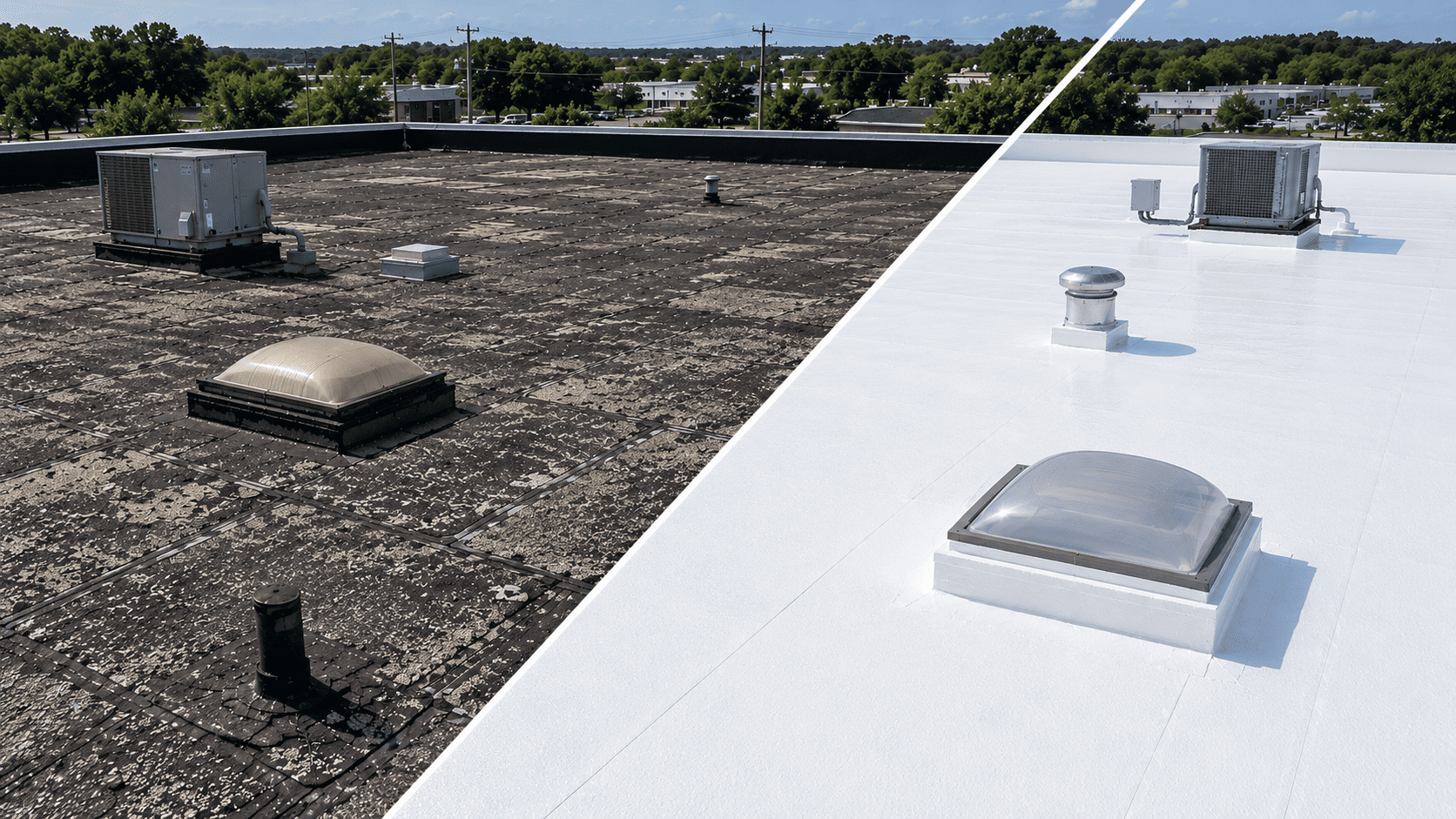 Modified Bitumen/BUR Roofs Coming soonGranulated asphalt cap sheets that drink coating — primed and coated, they gain a reflective waterproof cap.
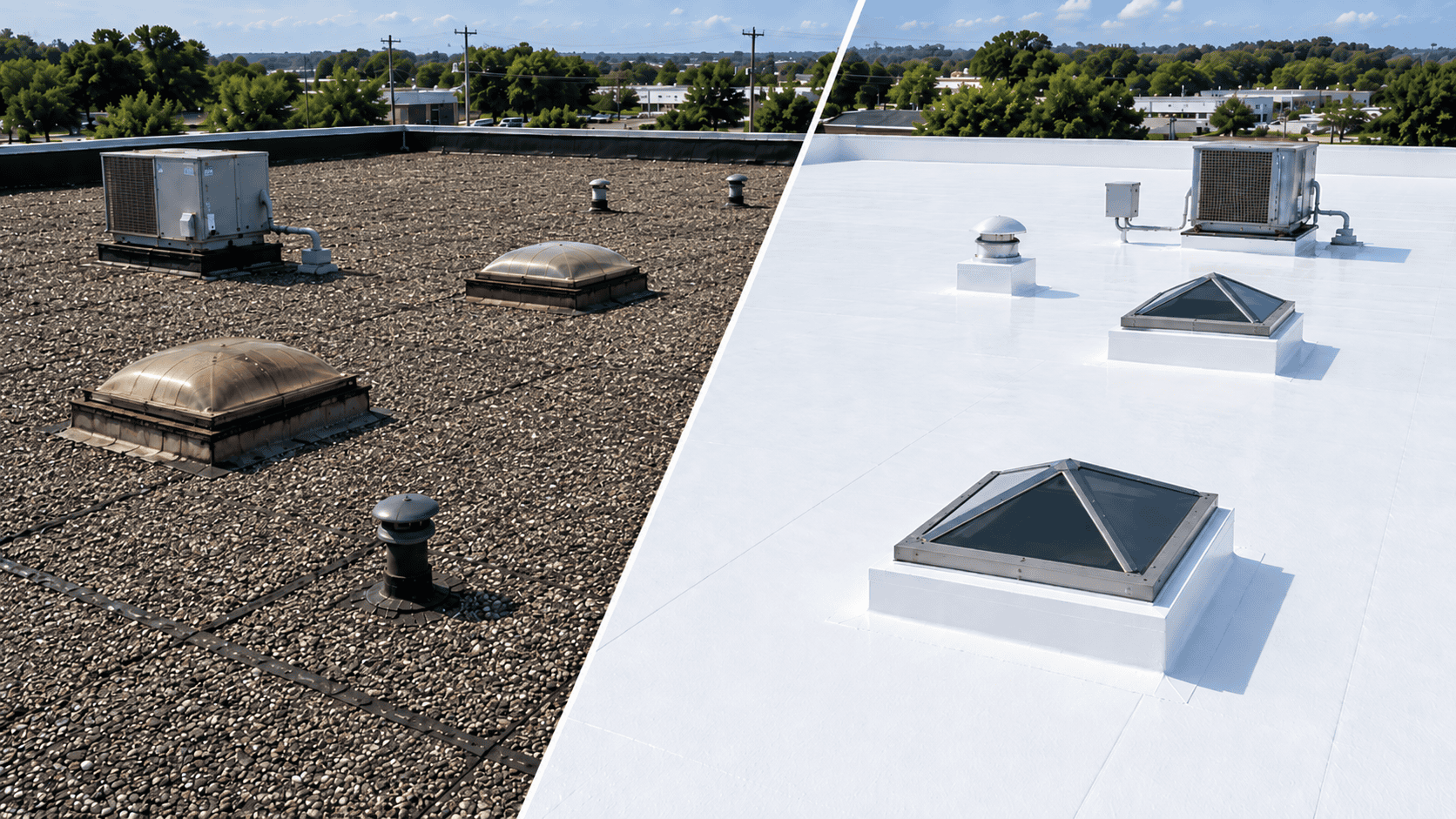 Tar & Gravel Roofs Coming soonLoose gravel is removed or embedded before coating — prep-heavy, but a strong candidate when the plies are dry.
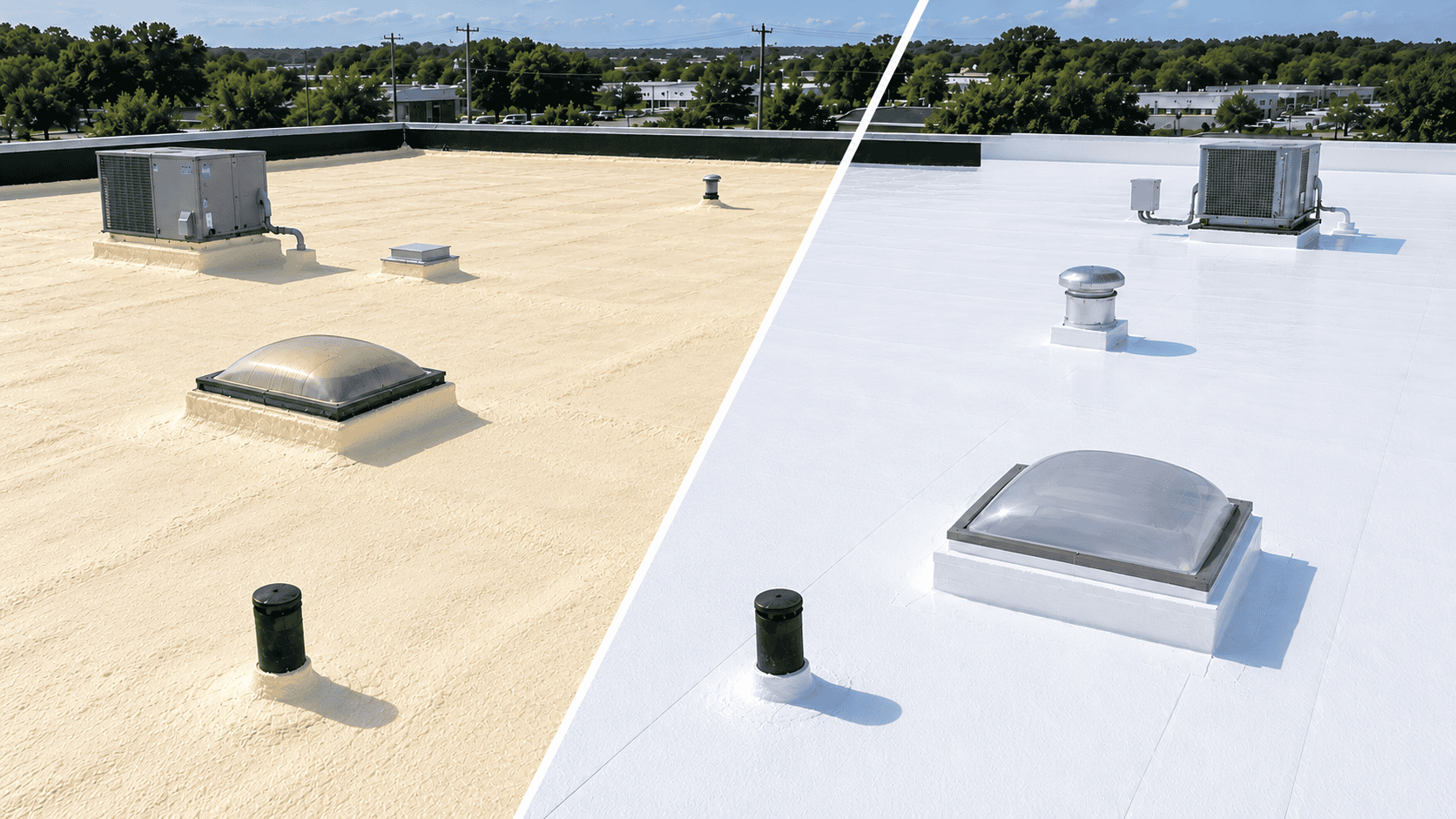 Spray Foam Roofs Coming soonCoatings are the foam’s UV armor. Recoated on schedule, an SPF roof lasts indefinitely.
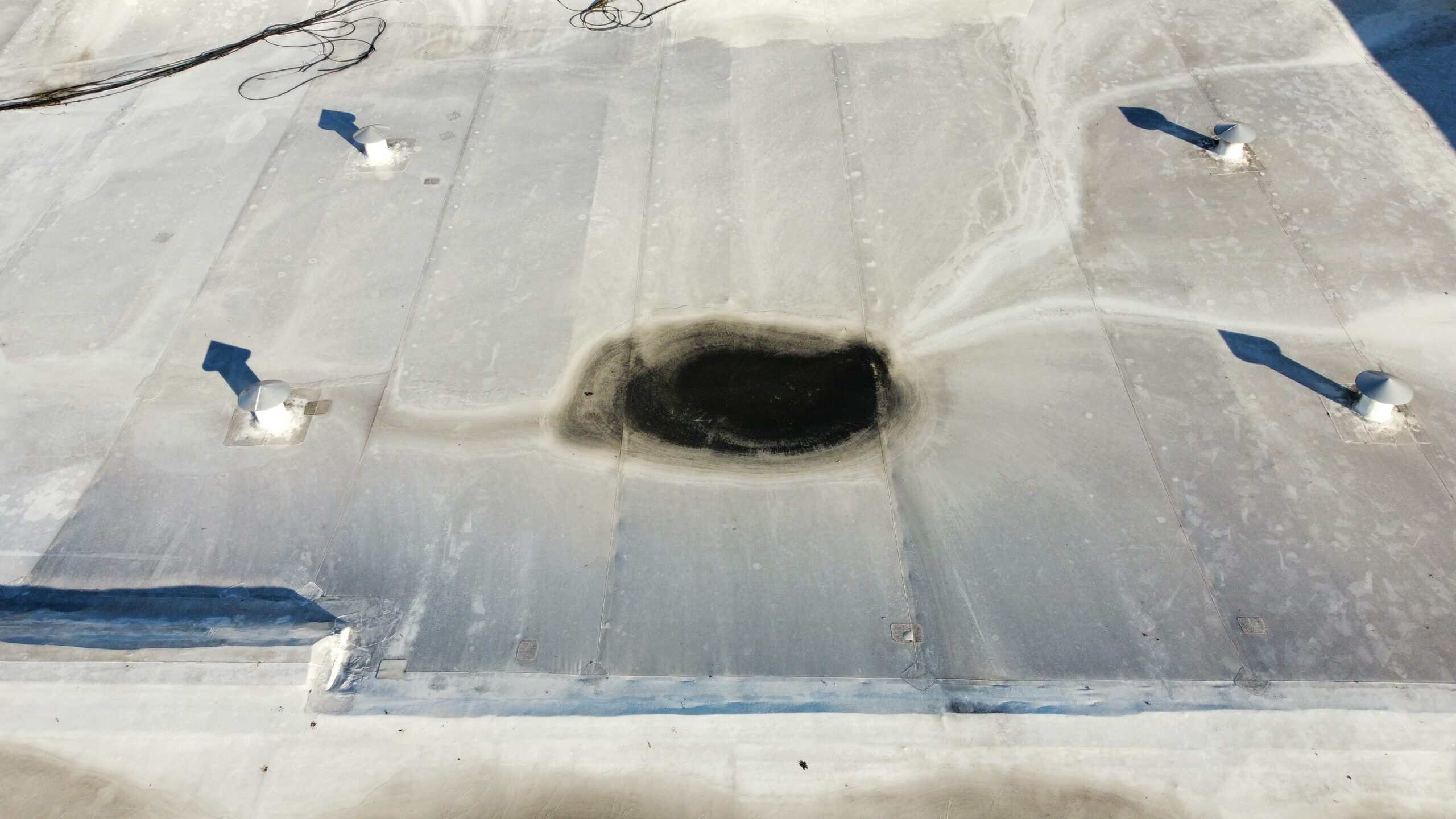 Ponding Water Coming soonDead-flat roofs hold water for days. It disqualifies most coatings and is exactly why silicone owns this category.
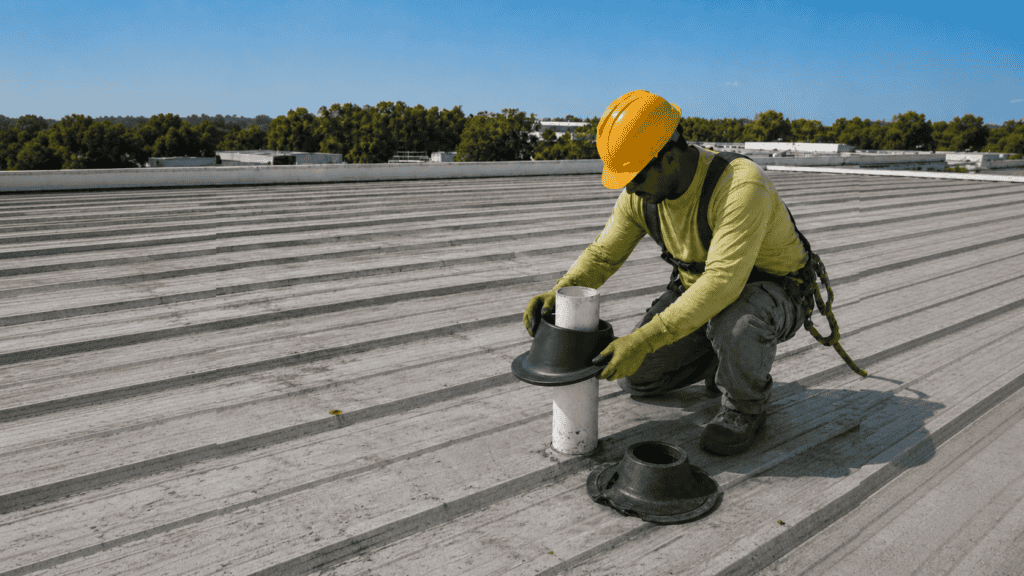
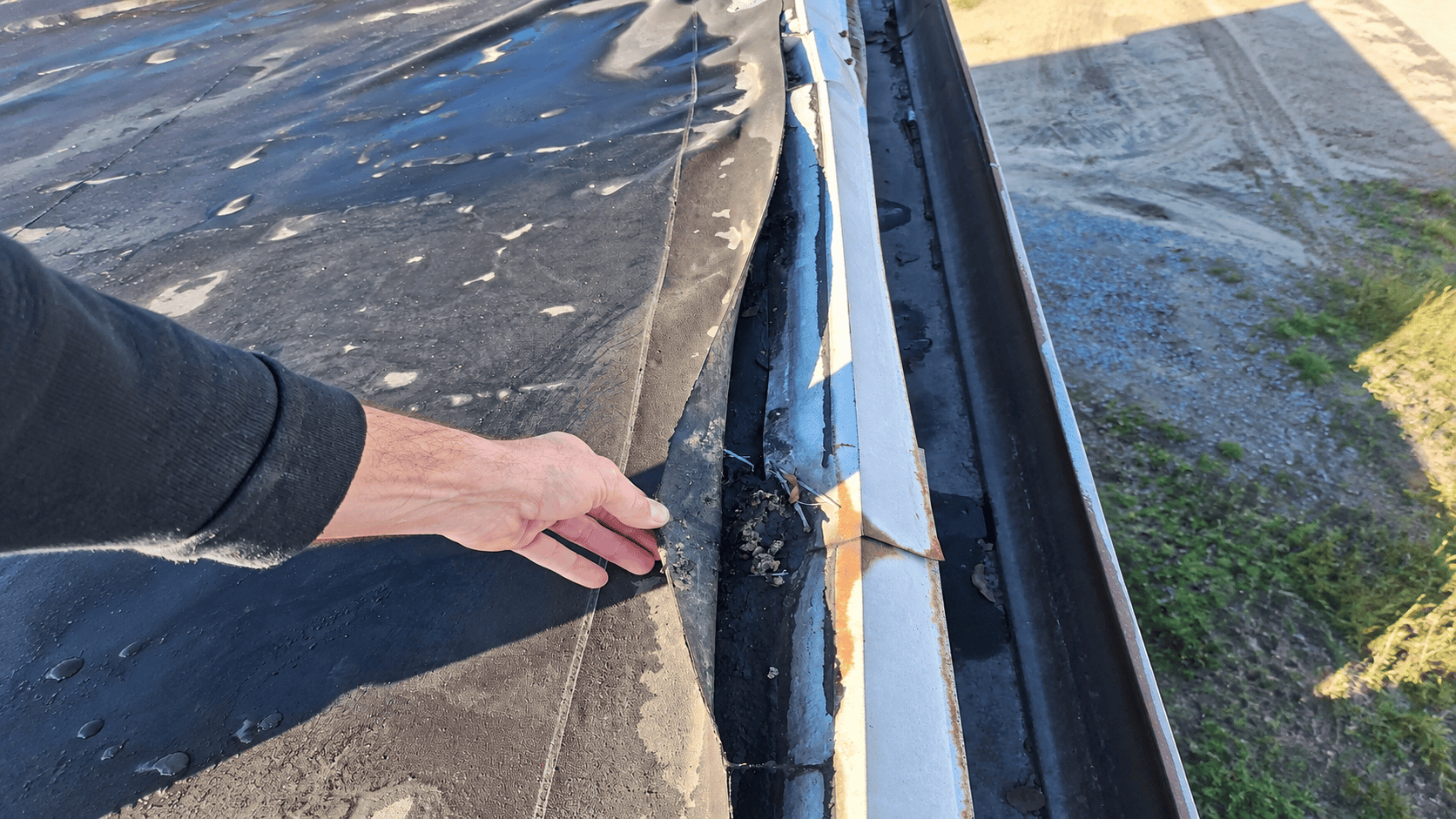 Seam & Flashing Failure Coming soonWelds, glued laps and pipe boots fail years before the field does — the #1 leak source on every flat roof.
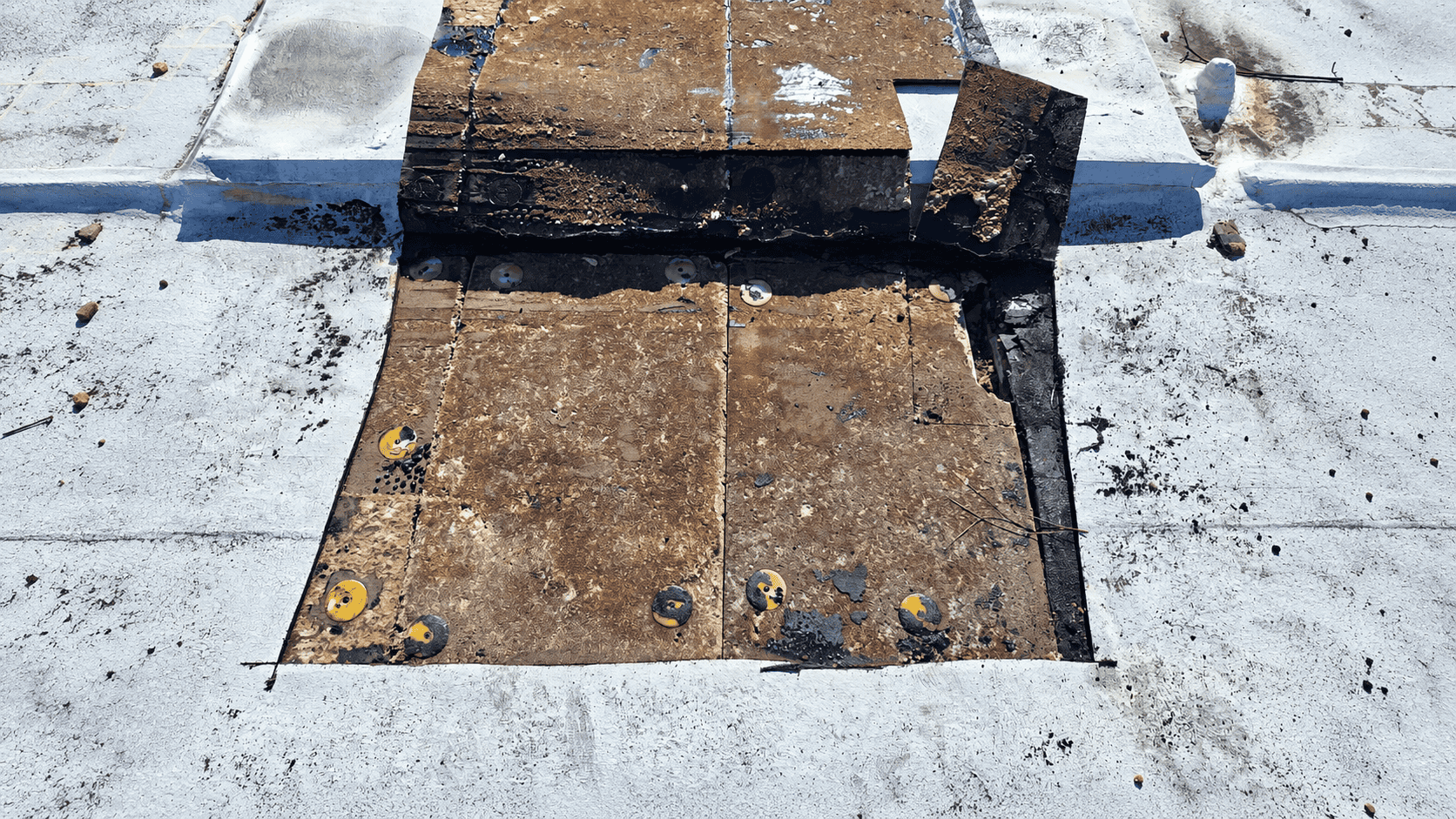 Trapped Moisture Coming soonWater that got in through old leaks soaks the insulation. Coating over it seals the rot in.
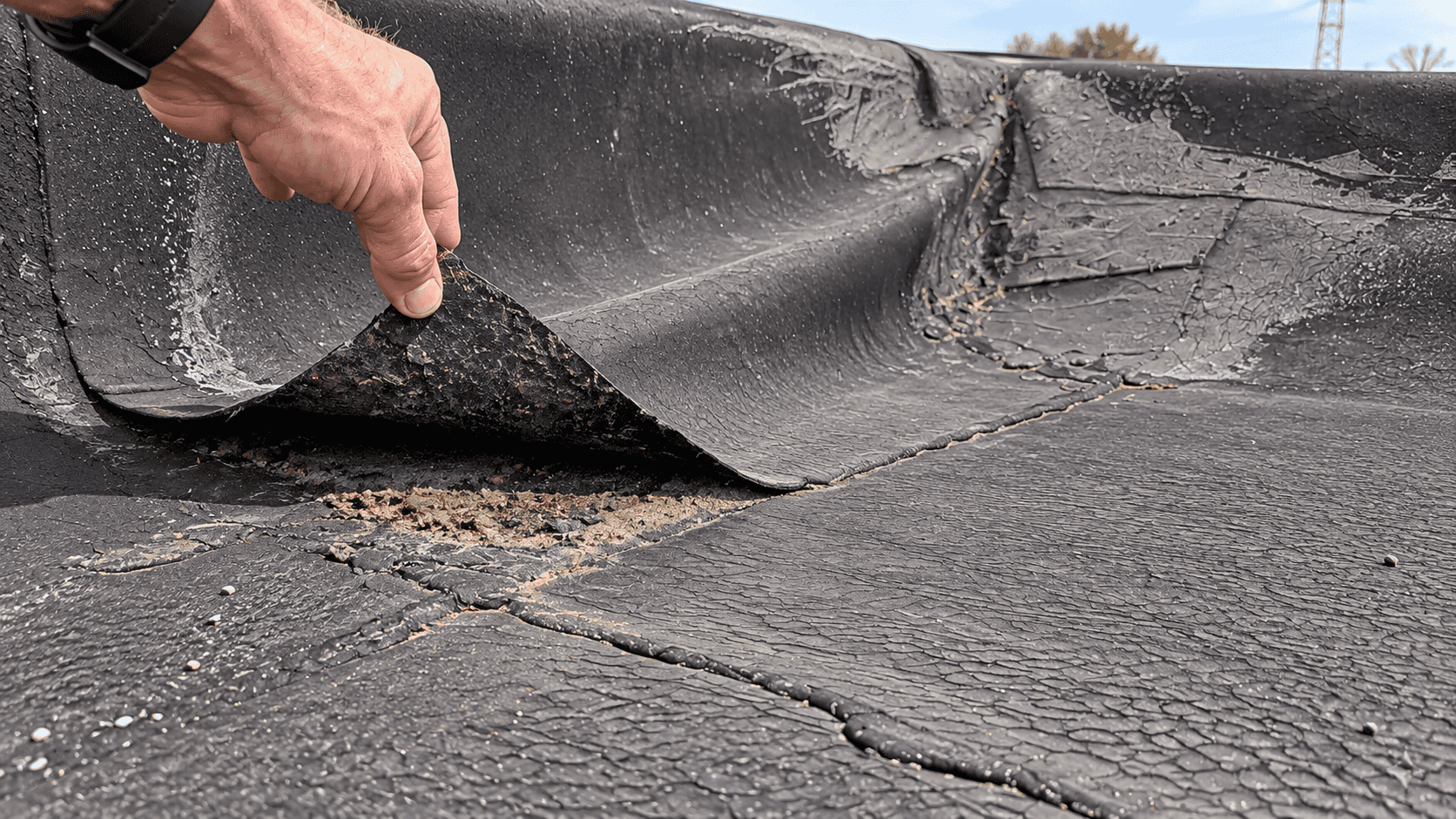 UV Aging & Shrinkage Coming soonSun chalks TPO and PVC, bakes EPDM, and shrinks membranes until they pull at every corner.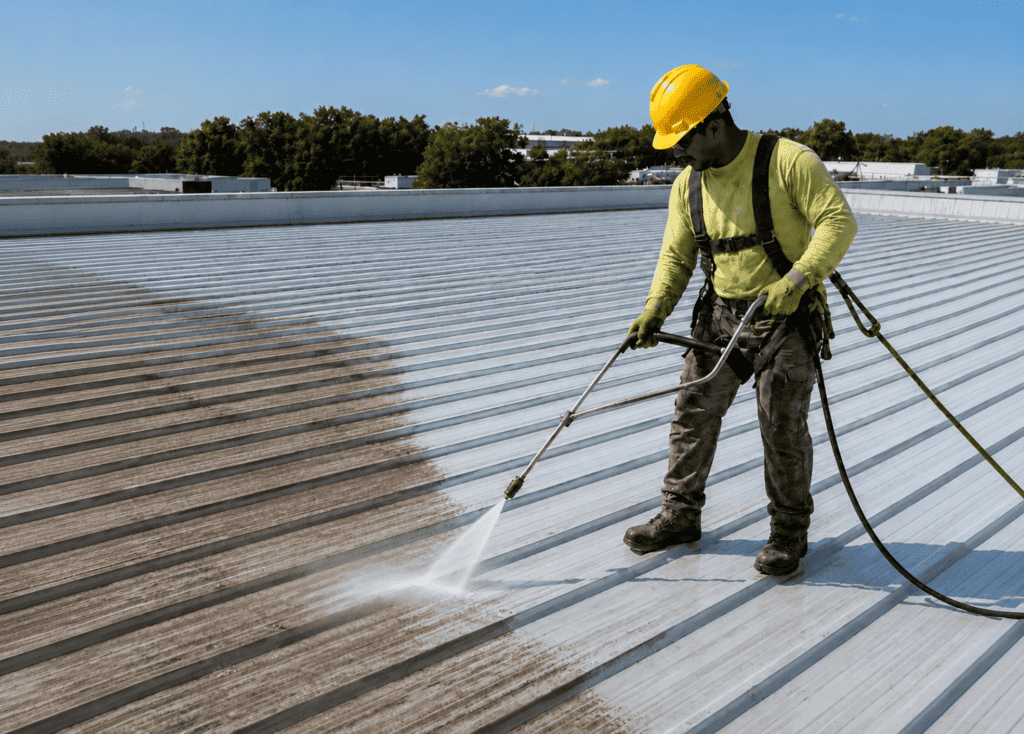

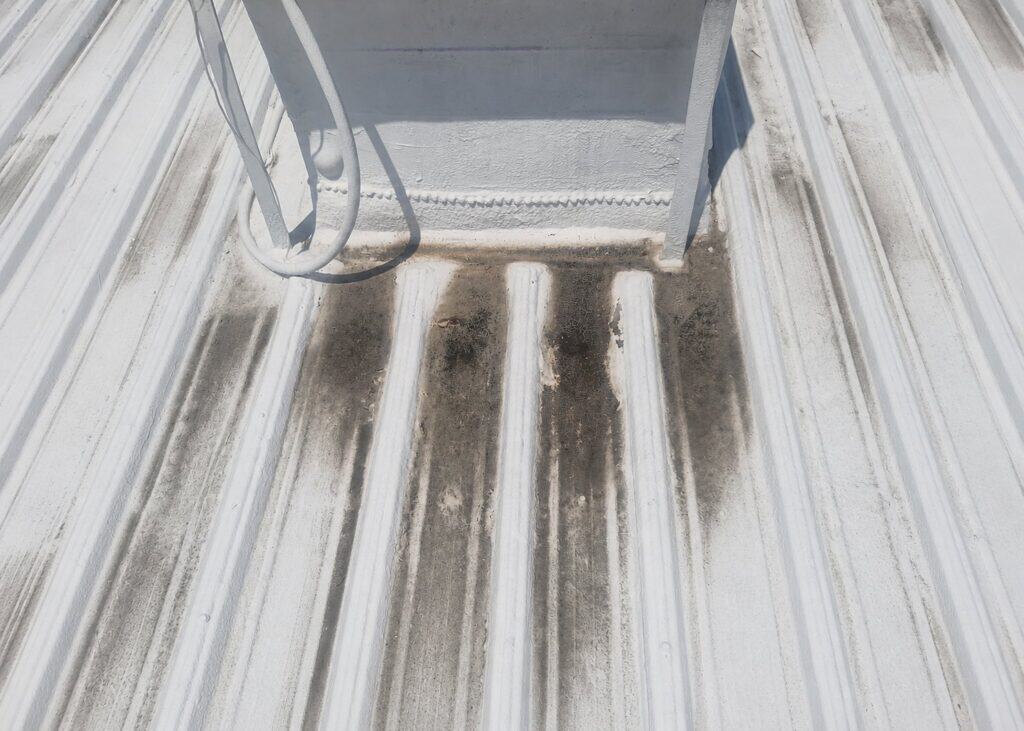 ⚠ Ponding on the wrong chemistryCause: Acrylic or another non-rated coating left under standing waterPrevention: Fix drainage first — or choose a ponding-rated silicone system
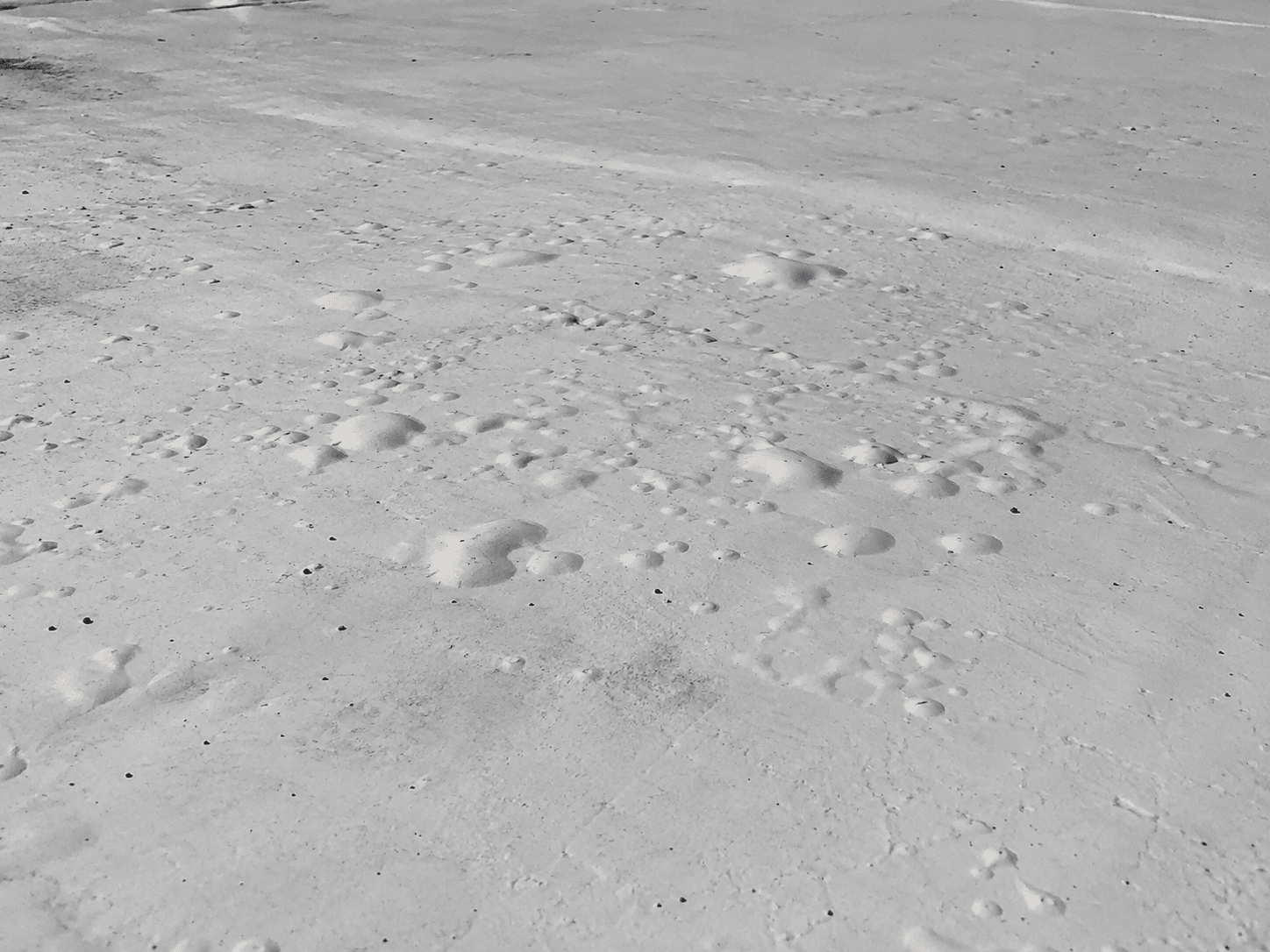 ⚠ Trapped moistureCause: Coating applied over wet insulation or a damp membranePrevention: Moisture-survey first; replace wet areas before any coating
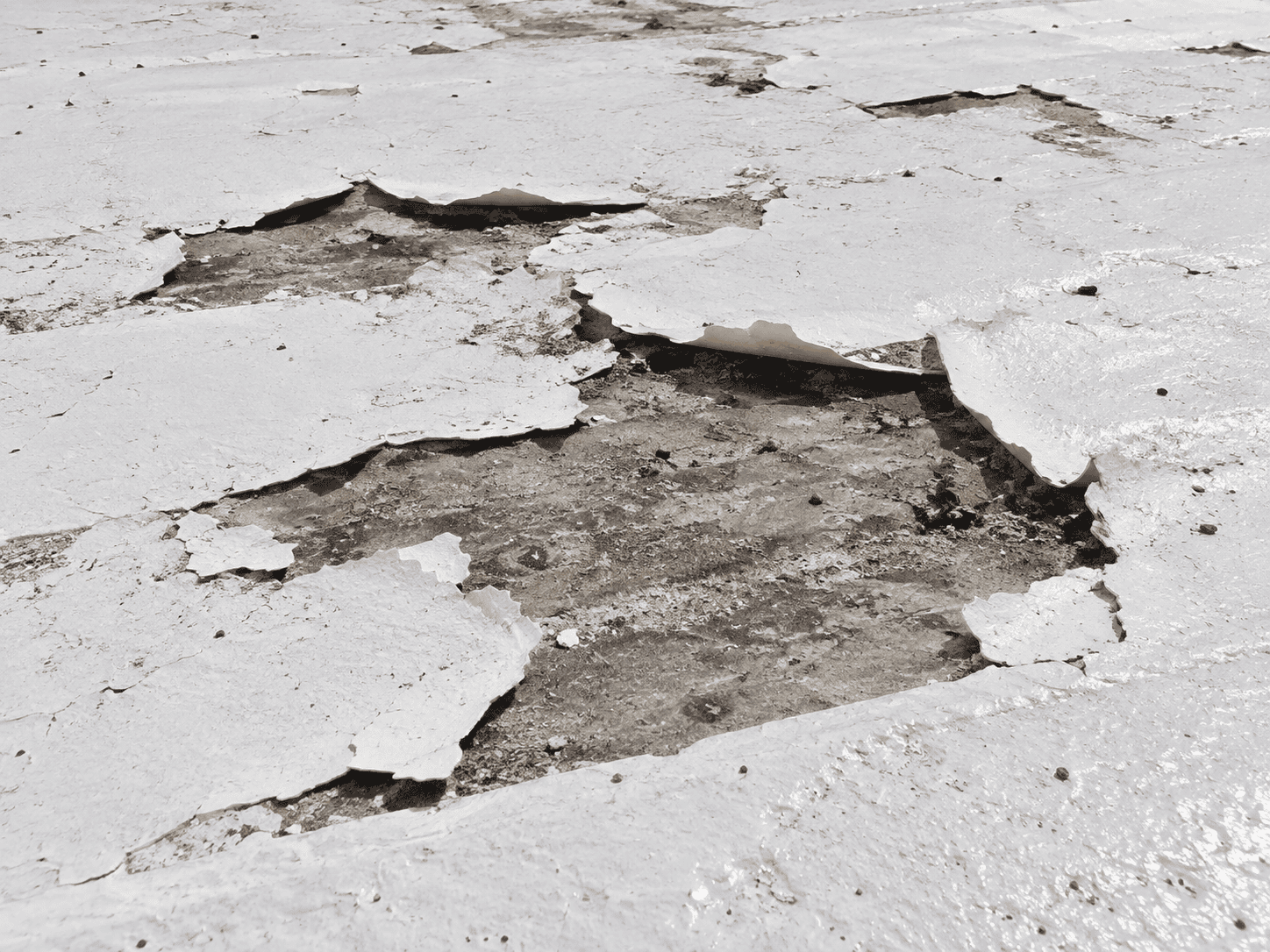 ⚠ Adhesion loss on aged single-plyCause: Slick or chalky TPO and PVC coated without the right cleaner and primerPrevention: Adhesion-test every substrate; prime where the test says
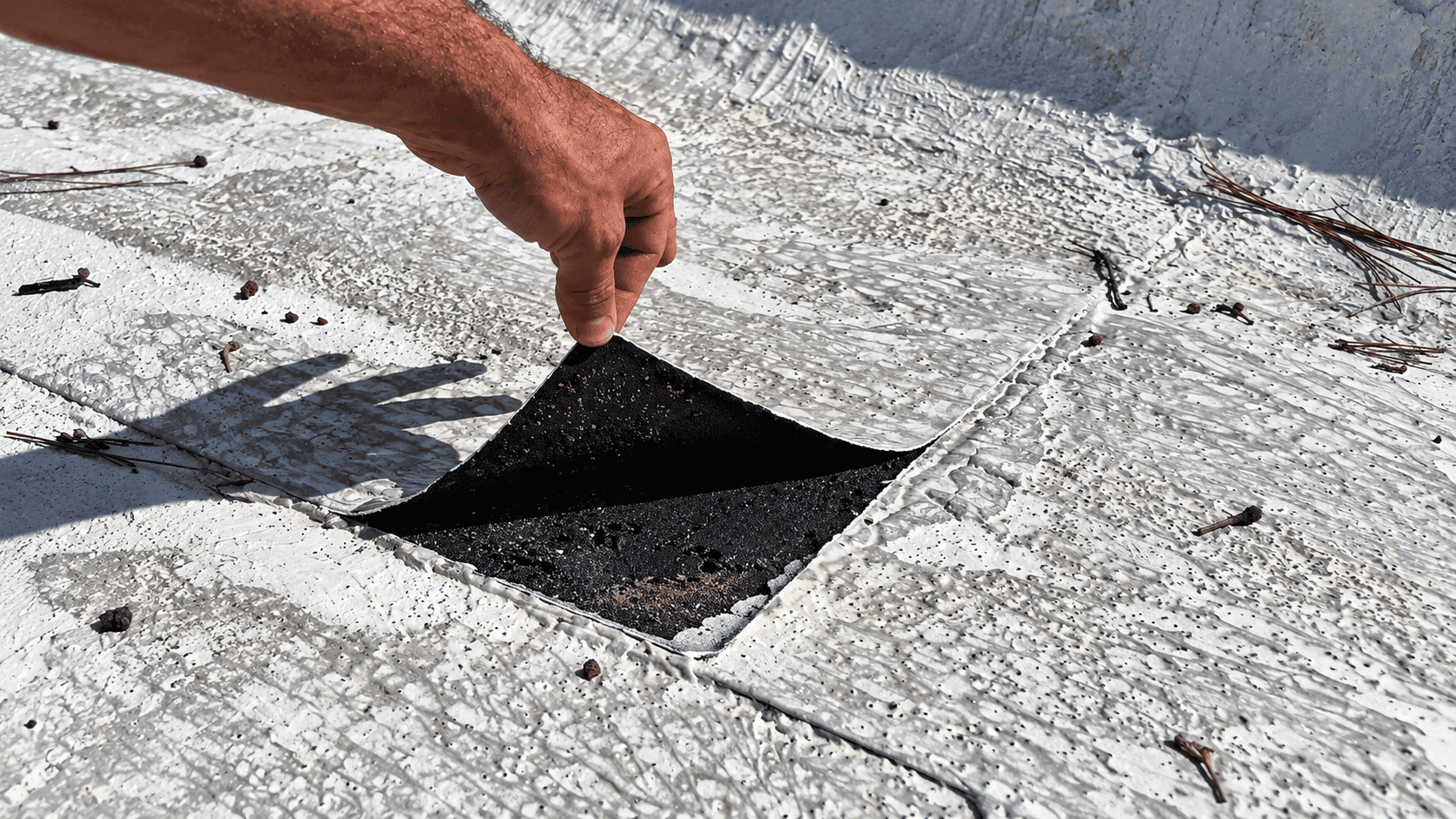 ⚠ Seam & lap failureCause: Field coated while the seams were left unreinforcedPrevention: Fabric-reinforce every seam, lap and penetration before the coating goes on
 ⚠ Thin applicationCause: Not enough finished membrane thicknessPrevention: Verify wet mils every pass with a gauge